Support for Debian 11 ended on 31 August 2026, and for CentOS 7 on 30 June 2024 (As of 2026-10). We will upgrade your server, or plan and carry out the move to Debian. We also work with Proxmox VE 8 and with physical servers that we move to Proxmox.
Linux operations: looking after, securing and monitoring servers
We look after Linux servers on your infrastructure or at any hosting provider: updates in a maintenance window, backups with restore tests, hardening and monitoring. This includes virtualisation with Proxmox, databases, network architecture with WAF and VPN, and central logs.
- Full-stack and DevOps experience since 2012
- Experience with KVM and Proxmox, MySQL and MariaDB clusters
- Reply within one working day

When Linux operations make sense
Typical triggers:
- The only administrator has left.
- A server keeps running without updates.
- A client or a bank sends a security questionnaire.
- A penetration test names vulnerabilities that nobody closes.
Agencies and software houses that look after their clients' servers also need reliable operations and evidence.
The service consists of four components, which you can commission individually or together. We always look at the application that runs on the server as well.
Two projects have their own pages: Server consolidation on Proxmox and MySQL and MariaDB databases, with backups, restore tests and high availability.

Linux operations
This is the core of the service. We look after your servers at any provider and proceed as follows:
- Takeover and inventory of servers, access, services and backups
- Hardening of SSH, firewall and services, management of TLS certificates
- Updates in a maintenance window, with a fallback plan
- Backups with regular restore tests
- Databases with MySQL and MariaDB, also as Galera clusters (overview under Databases)
- Fixing vulnerabilities from penetration test reports, and preliminary vulnerability analyses
You receive the list of findings, a monthly report and evidence for your auditor. Distribution upgrades and migrations are separate projects outside ongoing maintenance.

Virtualisation and consolidation
Does every application run on its own physical server that nobody wants to switch off? We move servers to Proxmox or into containers: after an inventory and a plan, in a maintenance window and with a fallback plan.
- less hardware that you have to maintain and replace
- backups, snapshots and recovery that we test
- a snapshot before every change, which makes updates easier
- documentation and a runbook
We calculate how much you save on hardware, electricity and licences in the consolidation plan. What else we do with Proxmox, from setup to upgrades, is shown under Proxmox.

Security architecture and WAF
We plan the architecture so that a server we take over cannot see all the others. That means zones in the network, servers behind firewalls, administration access only through a VPN, minimal privileges and backups outside the production zone.
In addition, we set up an application-specific WAF. Its rules fit your application and are tuned to your traffic over an agreed period. That reduces false alarms and gives protection that matches your application.
You receive an architecture diagram, the list of rules with reasons, the report on the tuning phase and the rules for administration access. A WAF does not replace a fix in the code. Why it is not enough on its own is explained in the questions below.
How we secure the application itself and fix findings from penetration tests is described under Web application and website security.

Monitoring and logging
The aim is to learn about a problem before your client calls. We collect logs centrally, record metrics from servers and applications and show what matters in a few clear Grafana views. Alerts exist only where someone has to react: full disk, expiring certificate, failed backup, mail queue, application error.
You receive the view of logs and metrics, agreed thresholds and a one-page guide on what an alert means and what to do. We agree the retention period and access with you.

Dates that trigger server upgrades
| Date | Event | Source |
|---|---|---|
| 2024-06-30 | CentOS Linux 7: end of life. | redhat.com (opens in a new window) |
| 2026-08-31 | Debian 11: end of LTS support. | wiki.debian.org (opens in a new window) |
| 2028-06-30 | Debian 12: end of LTS support. | wiki.debian.org (opens in a new window) |
Provider-independent, with our own infrastructure as a reference
We look after servers at any provider.
Looking only for a well-maintained website including hosting? That is what Prowde (opens in a new window), our own product, is for. Excellent all-inclusive hosting for simple company websites or shops, especially those built on WordPress.

Technologies we use in operations
Two typical starting points in detail
-
-
We move your Lucee, ColdFusion or PHP application from classic hosting into containers without rewriting it. That lets you rebuild, update and relocate the environment. Security updates for PHP 8.2 end on 31 December 2026 (As of 2026-10).
From our projects
-
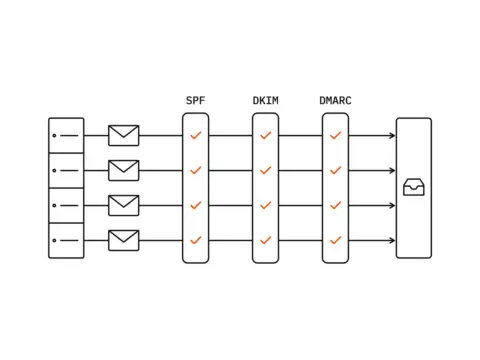
Email deliverability for four company domains
A mail server for four company domains signed nothing, published no DMARC policy and was rejected by Microsoft. Our engineers audited it, piloted the change on one domain and rolled it out in batches. The result: all three checks pass at Gmail, the Microsoft block was lifted, and the users noticed nothing.
-
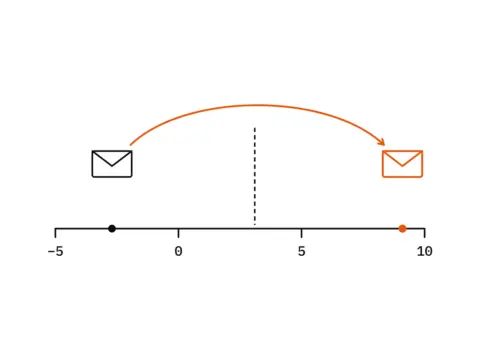
A spam filter that ran but did not protect
Services up, configuration valid, no errors in the system status. Yet phishing landed in the inboxes while partners' newsletters went to spam. Our engineers measured which detection mechanisms actually fired, repaired the causes, and three months later found and fixed a regression that only showed up hour by hour.
-
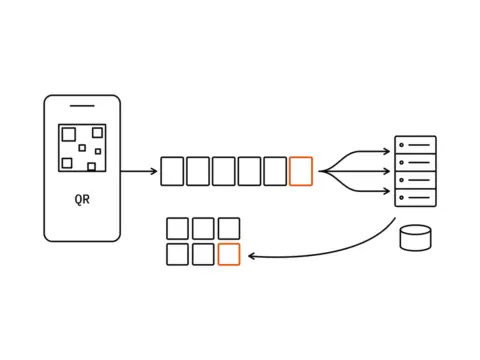
A photo upload app for wedding guests
Wedding guests scan a QR code, open one secret address and upload photos and videos straight from the phone: no app, no account, no login. Files of up to 5 GB land on the client's own disk, and the couple watches the gallery fill up during the party. One evening, no second chance, and phones from six years back.
-
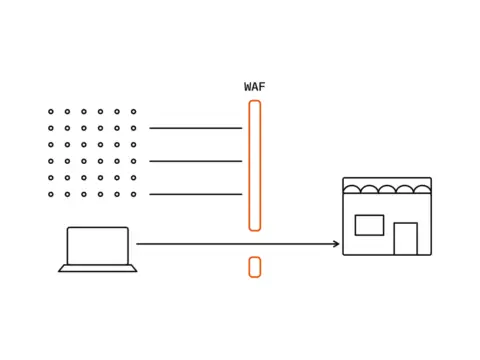
A shop flooded by bots that looked like customers
A WooCommerce shop with 52 products loaded slowly or not at all. The cause was a paid network of bots sending tens of thousands of requests an hour, each from a different home address, and every single bot behaved perfectly. Our engineers stopped the traffic at the edge of the network, and when the bots changed tactics a month later, the second rule took the load off within two minutes.
-
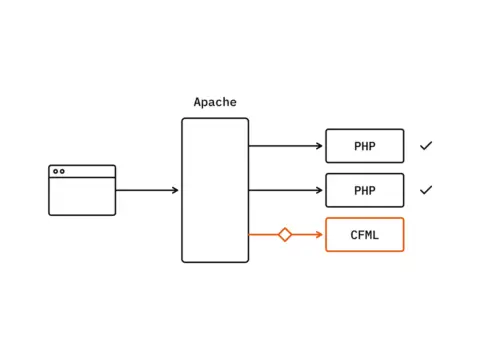
ColdFusion 2025 in production behind Apache: five traps that are not obvious
We prepared a production installation of Adobe ColdFusion 2025 on Debian 12, behind an Apache 2.4 that already serves several other sites. The installation itself takes 34 seconds. The attention went into the connector and the configuration details that are easy to miss: an error 503 caused by IPv6, mappings that reach into every virtual host, and a profile that quietly adds a debugger.


Questions about Linux operations and infrastructure
Do you have experience with Linux and Windows Server?
Linux is our main platform: Debian and Ubuntu, web servers, database clusters and virtualisation with KVM and Proxmox. We have run Windows Server with IIS in production since 2015. We recommend moving to Linux unless you prefer to stay with Windows.
Is a WAF enough?
Not on its own. A web application firewall (WAF) filters typical attacks in front of the application and buys time. It does not close a vulnerability in the code. That is why we combine it with fixing known vulnerabilities, network segmentation and administrator access through a VPN only.
A WAF with rules written for your application triggers fewer false alarms and protects better in practice than the default configuration. If the code cannot be changed quickly, a WAF with isolation is a stop-gap until the update. The risk then falls but does not disappear.
What do we gain by moving to a container?
An environment that can be rebuilt. The same version and configuration apply on the developer's machine, on staging and in production, recorded in the repository instead of in one person's head. We test new versions of PHP, Lucee or ColdFusion alongside production and can roll them back. Moving to another server or another provider also becomes easier.
A container fixes no bug in the code and does not bring an unsupported version up to date. It only makes those changes easier.
Do you cover weekend duty from time to time?
Yes. Support and emergencies are covered around the clock (24/7), weekends included. For other enquiries we are available Monday to Friday, 9:00 to 17:00 Central European Time, and we reply within one working day.
Do you work on your own hardware, or do we need to provide a laptop?
We work on our own hardware. We set up access to your systems through a VPN, SSH or a remote desktop. We need a device from you only if you prefer that.
What is your hourly rate?
It depends on scope, engagement model and urgency. Describe your situation briefly and, after a conversation, we will send you an offer. You do not need a budget for that. We quote fixed prices for the entry products.
The first step: server check with a list of findings and an upgrade plan
Server check
For companies with Linux servers that nobody knows well any more: before an upgrade, after the administrator has left or when a client asks about backups.
- Version and support status of the operating system and services
- Hardening: SSH access, firewall, open services and TLS certificates
- Updates: what is missing and how they have been applied so far
- Backups: what is backed up and whether a restore test is documented
- Monitoring and logs: what is monitored and what is missing
- List of findings in order of priority
At this stage we change nothing on the server. The check does not cover the application or its code. That is what the legacy review is for. We agree the scope and price in the intro call and confirm them in writing before we start. If you wish, you then receive a quote for ongoing support.
What the result contains
A written list of findings in order of priority, with recommendations on hardening, updates, backups and monitoring, plus an upgrade plan with maintenance windows. Both are yours.
In 20 minutes we work out which first step fits your system
You tell us the goal and the current state, and we say openly whether and how we can help. Reply within one working day, no obligation.
Phone (German, Polish, English)
+48 501 250 220
Email
Email
Reachable: Monday to Friday, 9:00 to 17:00 Central European Time; support and emergencies around the clock (24/7)